As you hear more and more reports on climate change it’s easy to get overwhelmed. There’re melting ices in the north pole, the average temperature of the earth is rising, and as I’m writing this there’s an important climate conference going on in Poland that could determine whether or not we take enough action against the negative changes. During all this you might feel like what you can do is not enough – but it is. You can’t expect yourself to single handedly save the world, but you can do your part.
My name is Emelie Gustavsson and I’m studying Food and Meal Science at Kristianstad University, Sweden. As I travelled to Copenhagen, Denmark to visit organizations that all work with food and sustainability in their own way, I brought along a question that I wanted to ask the people I met; how can we live more sustainably? My hope is that this post will give insight in some positive actions that are being taken and help you gather ideas on how to live a more sustainable life yourself.
One of my first destinations was SPACE10, a design- and innovation lab where they are working to find better and more sustainable solutions, especially when it comes to local food. They have carried out a lot of unique and interesting projects, for example “Sprout” – technology that enables plants to tell you what they need – and “Tomorrows Meatball”; where they explored future alternatives to meat. I spoke with Simon, chef at SPACE10, about his work, his passion for food and, of course, I asked the question; If you would give advice to someone who wants to live more sustainably, what would you tell them?
- If they have access to a kitchen, I would definitely say that they should start cooking more. Spark the interest for where and how the foods they eat has been made, produced and how it has travelled from the production.
Fødevarebanken, which translated would be the Food Bank, was my next stop. It is an organization that pick up leftover food items from stores and delivers it to homeless people and others in need – a lot like Robin Hood if you ask me. I followed along on a tour as some of the volunteers handed out milk, bread, meat, vegetables and fruits around Copenhagen. Fødevarebanken also deliver food outside of Copenhagen, and within the next four years they are hoping to be active all-around Denmark. Henrik, one of the executives, told me all about the organization and when I asked for his thoughts on sustainable living, he gave the advice to buy more locally produced food, eat less meat and of course – fly less.
Volontärer Fodevarebanken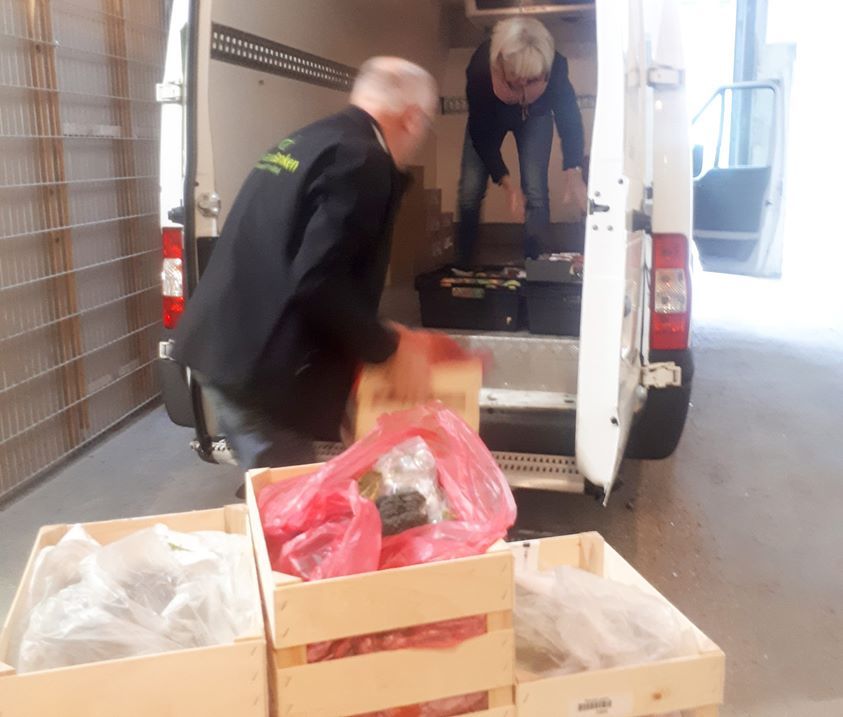
The Copenhagen House of Food was started as an initiative to creative better meals for the city residents. Emma gave me a tour of the work place and told me about their different projects, for example “EAT” where they educate kitchen staff to cook nutritional and tasteful meals for school children. The House of Food also have a large focus on organic food and helps public kitchens to convert to ingredients of an organic origin. To live more sustainably, Emma’s suggestion was to start small. Instead of trying to change everything at once, she said that we should choose one thing to focus on and then, as time passes, we can start doing more sustainable choices.
House of Food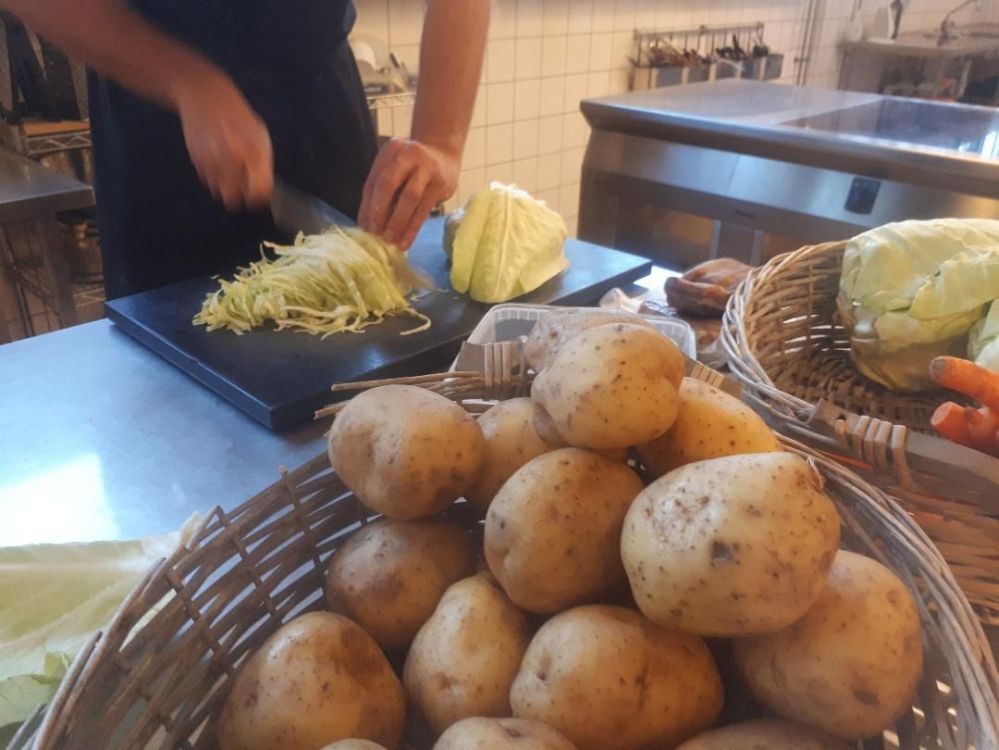
The students studying food management at Metropolitan University College in Copenhagen get to learn – among other things – about food waste, ecological food and sustainability. I got the opportunity to visit the university as a special cooking class was taking place; the students were challenged to create new dishes from food that would normally be considered food waste. I took the chance to talk a little with Terkel, the cooking teacher, during the lesson.
- If you just think outside the box and get a little creative, you can eat your leftovers instead of throwing it away, he explained.
Matlagningslektion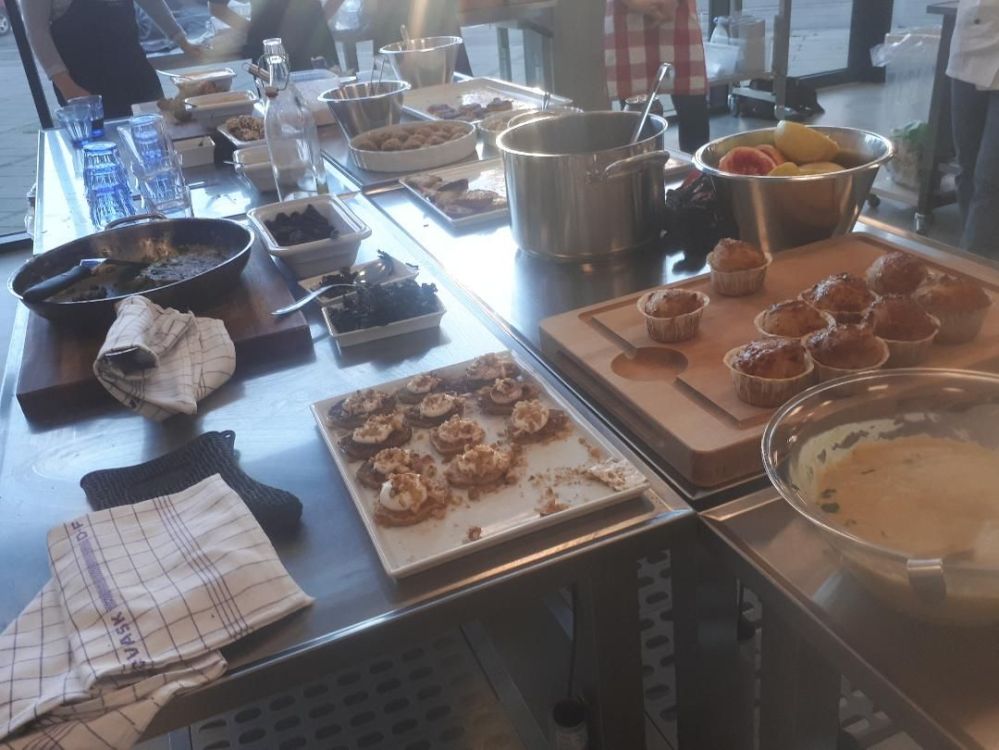
When asking for his advice on sustainable living, he had many suggestions; travel by train, public transport or by bike, buy things of high quality that will last longer, avoid food waste, eat food based on season, try to grow food locally and be more self-sufficient. Terkel also believed that we must change the political laws and put higher taxes on things, such as red meat, that are harmful for the environment.
As I mentioned earlier, you can’t expect yourself to save the world all on your own, but you can do your part. If we all take responsibility for our own impact on the climate, we could change the outcome – but we need to act now. I hope this post has in some way inspired you to take action and change your habits. Maybe you need to do things that are a little bit outside of your comfort zone, but it’s worth it. Good luck!
Find out more about the organizations below.
SPACE10: https://space10.io/labs/local-food/
Fødevarebanken: https://www.foedevarebanken.dk/english
The Copenhagen House of Food: https://www.kbhmadhus.dk/english/aboutus
Metropolitan University College: https://www.phmetropol.dk/English
Text and photos: Emelie Gustavsson, Kristianstad University/Food and Meal Science, Sweden.
 Sustainable Nordic Food