Skyr is only the tip of the iceberg of Icelandic food. We dived into the food scene of Iceland and found out that the country is much more than we had dared to imagine.
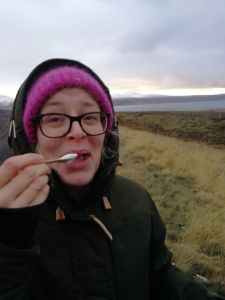
As every travel guide loves to mention, Iceland is the land of fire and ice. For food production, this means incredible support and hospitality from the earth itself in the form of geothermal energy. On the other hand, the winds are unforgivable and ready to tear up all plants by their roots – this is where greenhouses prove their worth, especially when the energy costs next to nothing. We visited one that cares about sustainable food and the farm-to-table mindset so much so that the farm has become the table.
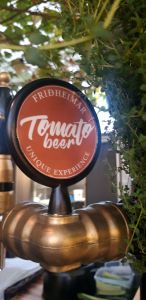
The Friðheimar greenhouse cultivates tomatoes and cucumbers which are then served at the restaurant inside the greenhouse. The diversity of different foods and beverages produced from their tomatoes is astonishing. We got the chance to have a sip of their tomato beer co-developed with a brewery in Reykjavik. Other specialities the freshest tomato soup imaginable, tomato ice cream and green tomato and apple pie. Obviously, a considerable part of the ingredients used in the restaurant are hyper-local, unlike the guests, many of which seemed to be tourists. Not only is the experience unique but the concept is executed in a way that raises no questions about the responsibility of the business. Interestingly, the owners Knútur and Helena have collaborated with Finnish experts to improve their artificial lighting system and mention in their website that horticulture under artificial lighting is very advanced in Finland.
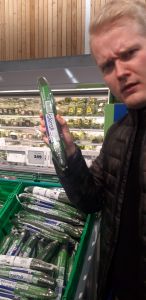
But it did feel strange to come to Iceland to get so excited about tomatoes. Our local guide on Sunday, chef Dora Svavarsdottír and a member of the Slow Food network, explained that the Icelandic government limits the agricultural subsidies for greenhouses to the cultivation of tomatoes, cucumbers and bell peppers. Consequently, we observed in supermarkets and heard from locals that Iceland lacks in diversity of fresh fruits and vegetables whereas processed food is omni-present. A major liberation in the food trade between EU and Iceland in 2018 has augmented the Icelandic import of fruits (including dried fruits) from 14 million euros in 2014 to 22 million in 2018 and vegetables (including dried vegetables) from 15 million to 24 million. A troubling fact is the explosive growth of waters and soft drinks shipped to Iceland from the EU: from a relatively healthy 5 million euros in 2014 to 22 million in 2018. Do Icelanders have to pay for healthy food with unhealthy food? Has the European Union really considered their own sustainability principles or are we still doing business as usual?
Sheep and goat meat imported to EU from Iceland has seen a considerable growth of 5 million euros between 2014 and 2018. During our trip we had the pleasure of meeting Hafliði Halldórsson, the Managing Director of Icelandic Lamb, a company that currently focuses on promoting Icelandic lamb meat to tourists. Hafliði gave us a very educational presentation about the animal itself as well as the socio-cultural aspects related to the production of the meat. The sheep are free to roam the highlands of Iceland during the summer and graze on plants that profit from long sunlight hours. The lambs are slaughtered at the age of four to five months which guarantees mouth-watering tenderness. Before this, the sheep are rounded up during a spectacle called Réttir, one of the oldest cultural traditions of Iceland.
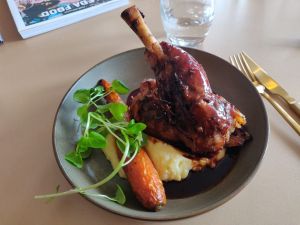
We were glad to have taken Hafliði’s advice to have lunch at Mímir, a restaurant operating in Radisson Blu Saga Hotel, which is owned by the Farmer’s Association of Iceland. From there we continued to Matís where Þóra Valsdóttir kindly shared her expertise on food science. Matís is a government-owned, non-profit research company that hosts a sensory panel for industries as well as a national reference laboratory among other services. Matís participates in the NextGen Proteins project together with Finnish partners such as Fazer, Entocube (cricket farming) and Technical Research Centre of Finland (VTT).
We had planned the travel program to include all areas of the food system. Different viewpoints helped us reflect our learning during the trip and towards the end it came clear that albeit the UN Sustainable Development Goals might be shared in different organizations and communities, collaboration (or the lack of it!) plays a huge role. Our meetings with the local people and organizations were truly valuable and there is no doubt what the food system needs in order to develop to a more sustainable direction: dialogue.
Text and photos: Jouni Koskinen and Taru Lyytinen, 2nd year Sustainable Gastronomy students at JAMK University of Applied Scinces
 Sustainable Nordic Food